The Ultimate Guide to the Perfect Tile Layout Subways, Herringbone, and Beyond
When planning a kitchen or bathroom remodel, it is incredibly easy to get lost in the sea of material choices. Homeowners spend weeks debating the merits of ceramic versus porcelain, hunting for the perfect shade of warm gray, or weighing the cost of hand-made Zellige tiles.
But as a full-service build and design firm, our team at Under Pressure General Contracting often has to remind clients of a critical, hidden design element that completely alters the final look: the tile layout pattern.
How your tile is arranged dictates the visual flow of a room, directly influences the perceived square footage of a space, and significantly impacts labor complexity. More importantly, from an investment standpoint, the pattern you choose plays a massive role in whether your remodel remains timeless or quickly dates itself—which directly affects your home’s future resale value.
In this definitive guide, we break down the most popular tile layout patterns, analyze their technical requirements, and reveal which designs will truly stand the test of time.
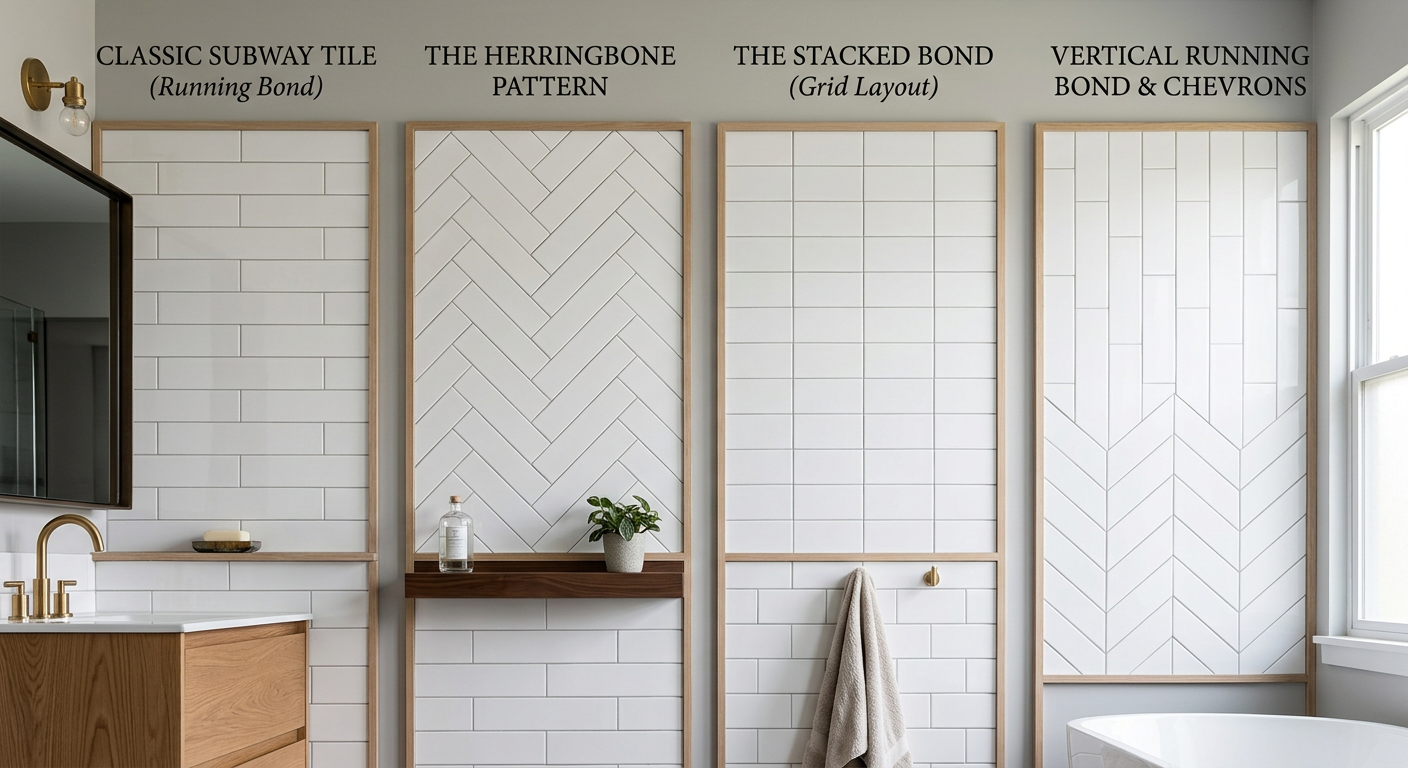
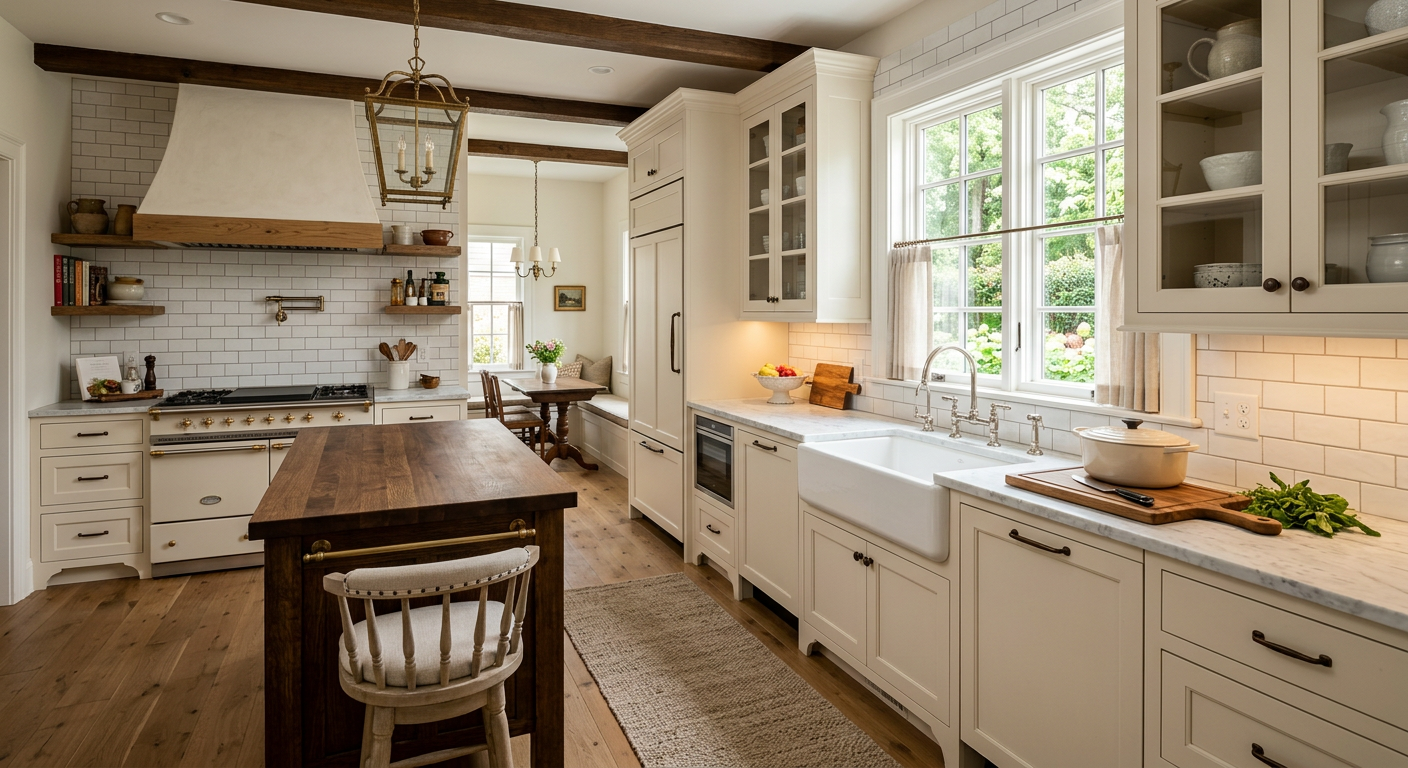
The Classic Subway Tile (Running Bond / Half Offset / 50/50 Brickset)
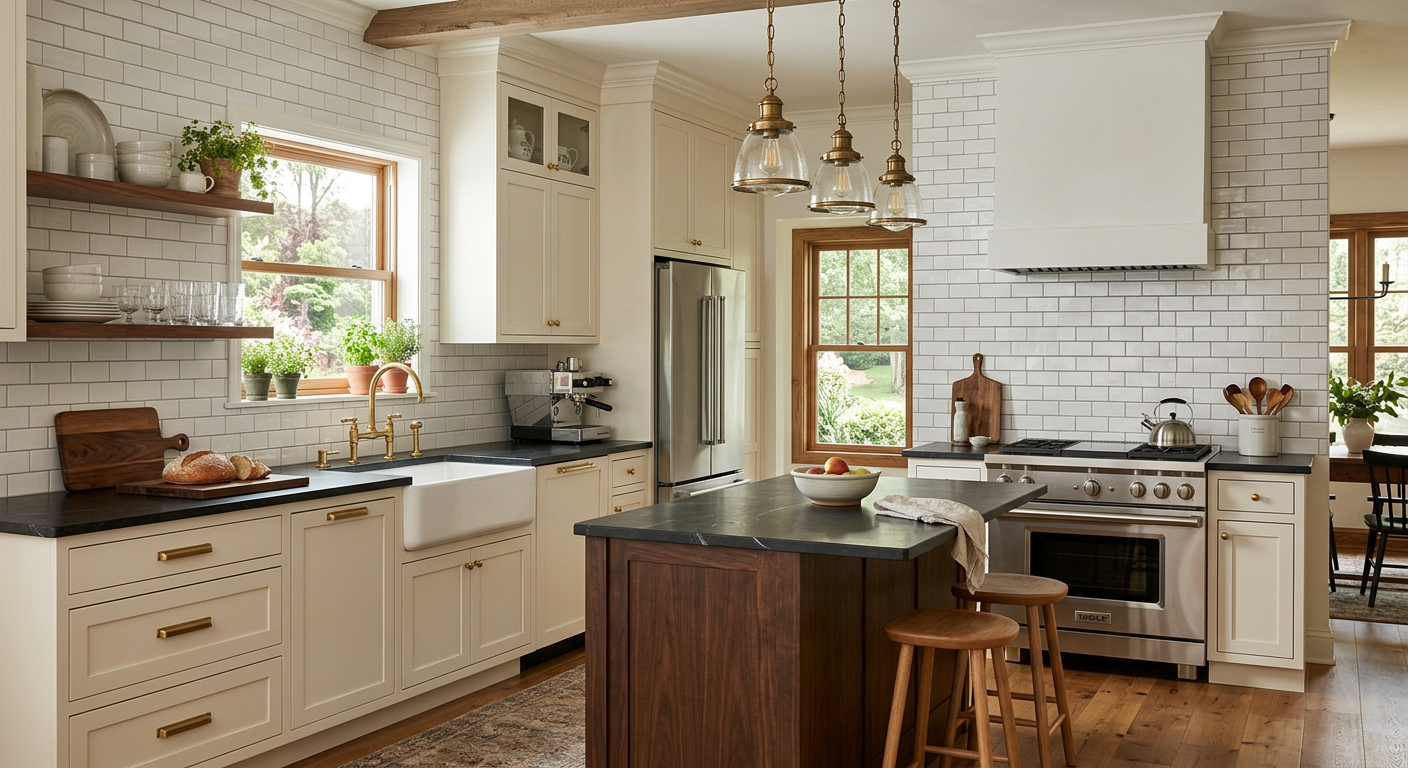
Originating in the New York City subway system in 1904, the traditional running bond—commonly known as the subway layout—is an offset pattern where each rectangular tile overlaps the one below it by exactly half its length.
—--Visual & Spatial Impact
The running bond creates a highly stable, grounded aesthetic. Because the lines are broken up rather than running uninterrupted from floor to ceiling, it is incredibly soft on the eyes. Visually, a horizontal running bond draws the eye across the room, creating an illusion of width. This makes it an excellent choice for expanding narrow shower walls or making a compact kitchen backsplash feel more expansive.
—--Technical Execution Notes
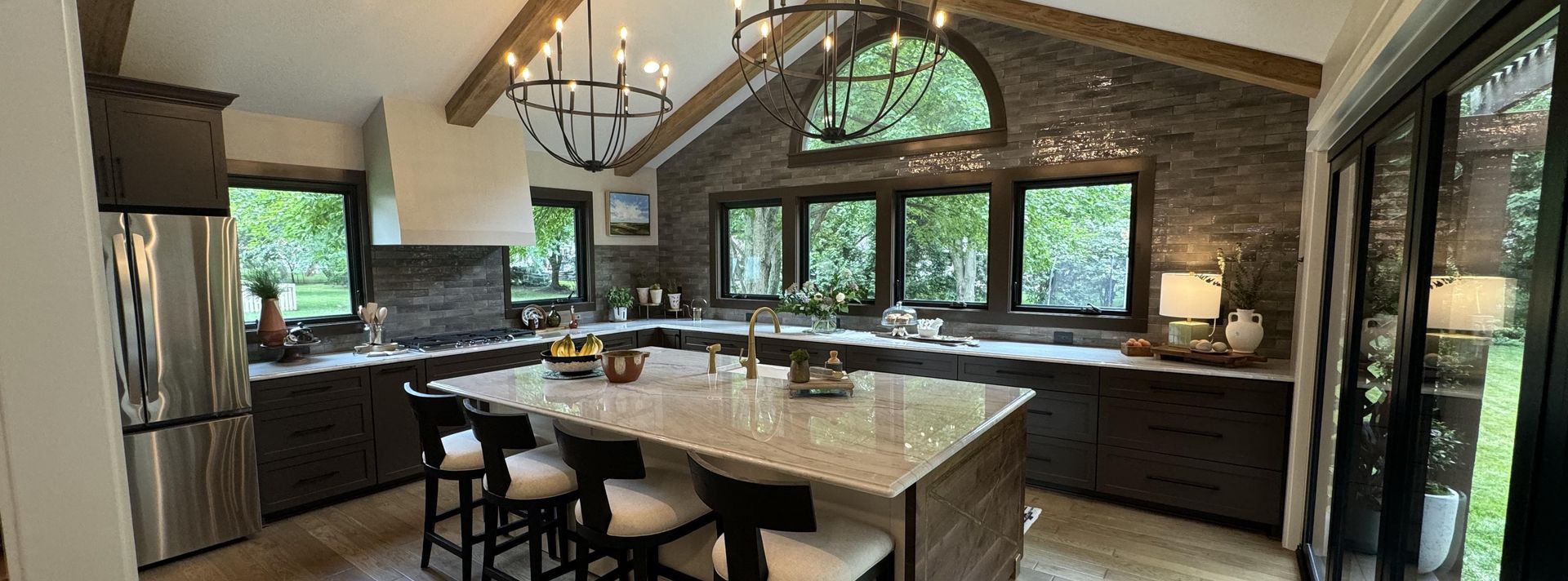
While a 3x6-inch white ceramic tile is the historical standard, modern variations utilize larger formats like 4x12- inches or beautifully textured, hand-cut look tiles. One of the greatest structural advantages of a running bond is that the offset layout naturally masks minor variations in wall plumbness. If a wall in an older home bows slightly, a running bond is the most forgiving pattern to hide those imperfections.
—--ROI & Resale Value: The Undisputed King
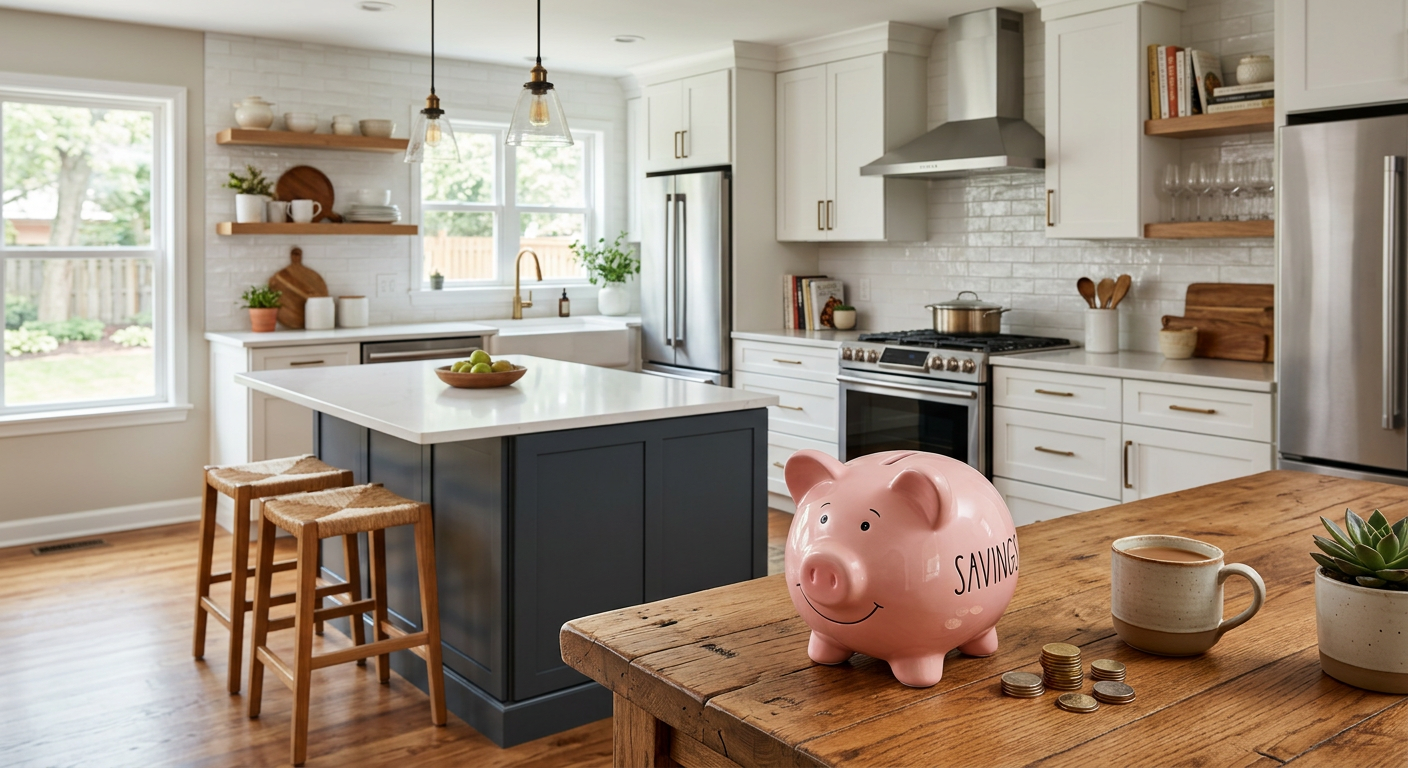
If your primary goal is maximizing resale value and ensuring your home commands top dollar five, ten, or fifteen years from now, the horizontal running bond is your safest bet. It is completely immune to the shifting tides of interior design trends. It bridges the gap between historical charm and modern freshness, meaning a future buyer will never walk into the space and factor the cost of a "dated tile demolition" into their purchase offer.
The Herringbone Pattern
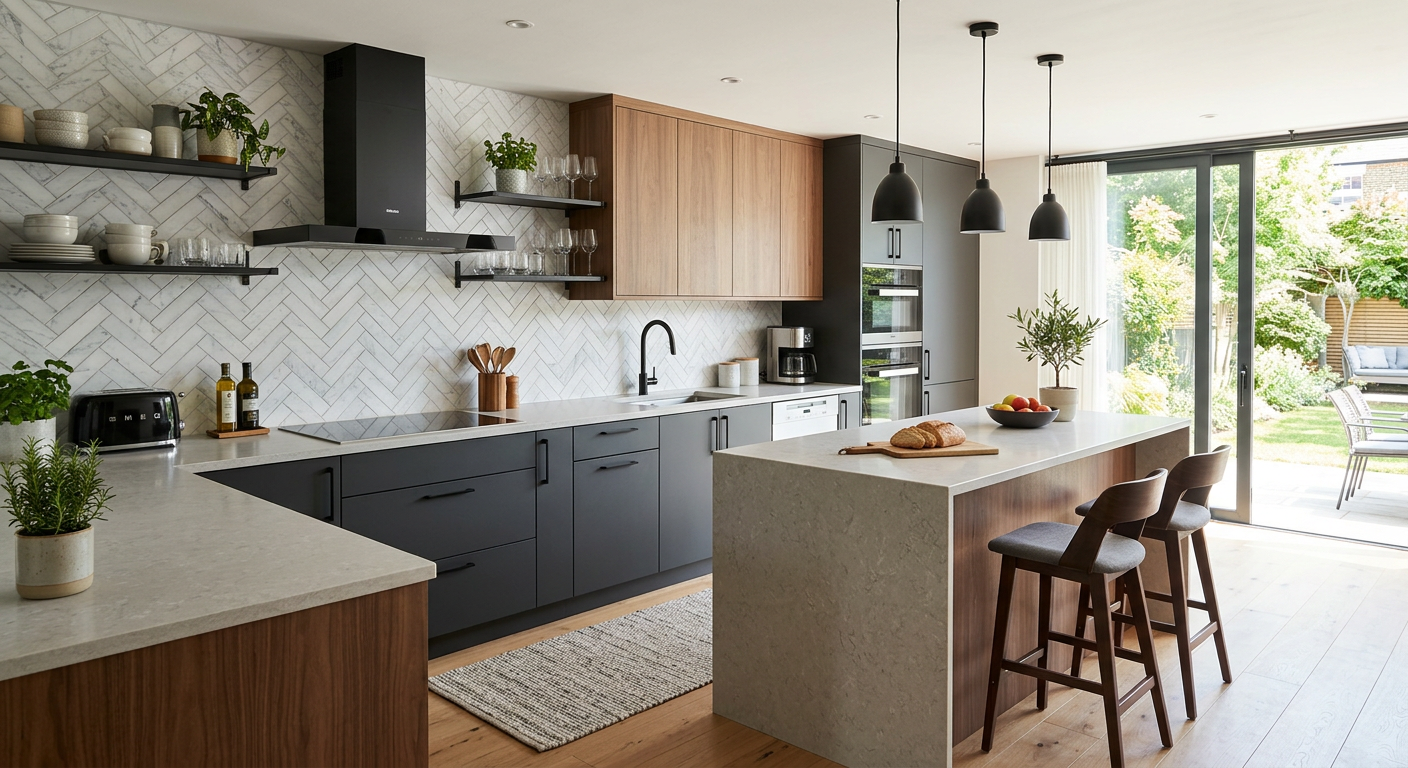
The herringbone pattern is achieved by placing rectangular tiles at a precise 90-degree angle to one another, forming a continuous zigzag layout. This is a historic, European-inspired pattern that instantly signals premium luxury and intentional architectural design.
—--Visual & Spatial Impact
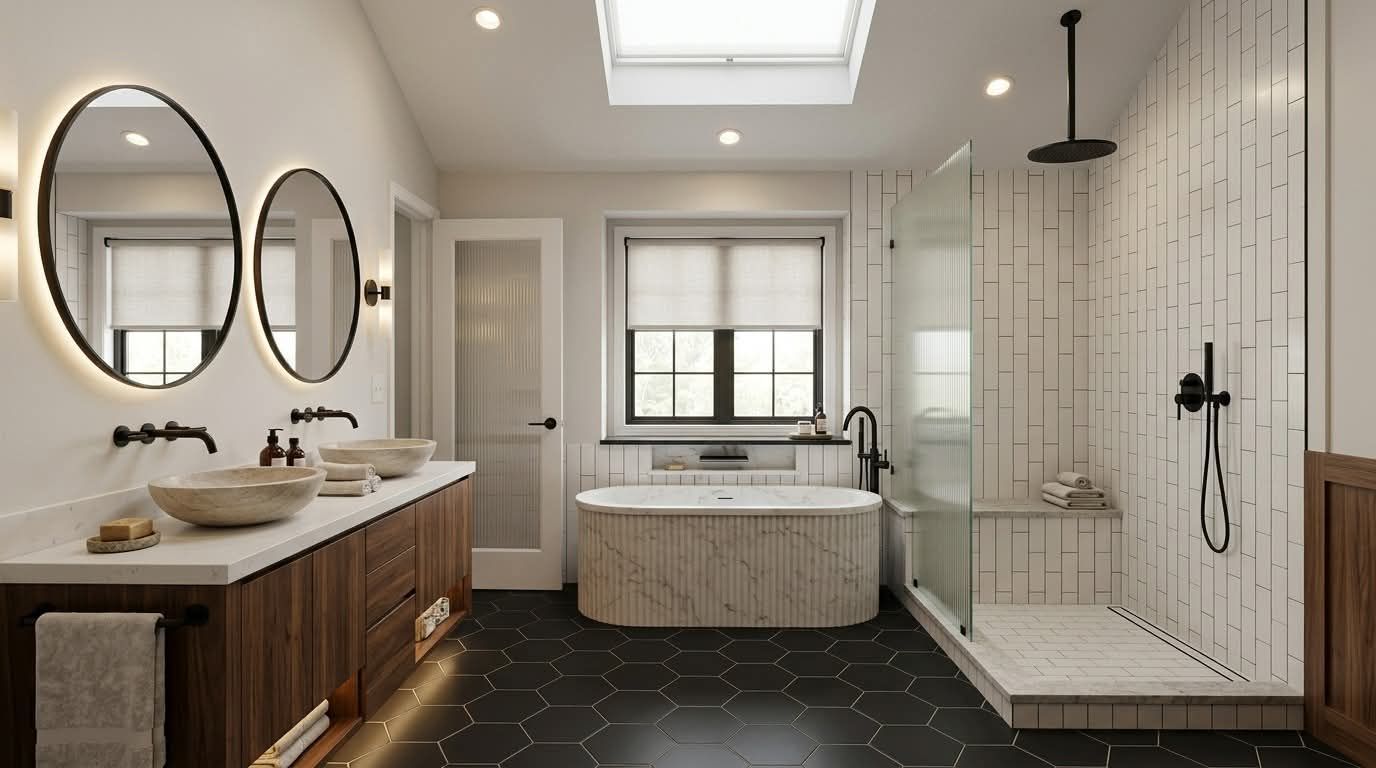
Herringbone is highly dynamic and full of movement. The interlocking "V" shapes draw the eye upward and outward simultaneously. If you want to make a bathroom ceiling feel higher, running a herringbone pattern vertically up a shower wall is an incredibly effective design trick. It functions beautifully as a focal-point accent wall behind a kitchen range or as a grand statement floor in a main bathroom or mudroom.
—--Technical Execution Notes
At Under Pressure General Contracting, we always advise clients that herringbone is incredibly labor-intensive. It demands meticulous layout mapping from the exact center point of the wall or floor. If the initial alignment is off by even a millimeter, that error compounds rapidly across the surface, throwing off the entire grid. Furthermore, because of the complex diagonal cuts required at every wall and floor boundary, herringbone requires a higher material waste factor—typically 15% to 20% compared to the standard 10% required for basic layouts.
—--ROI & Resale Value: High Value, Calculated Risk
Herringbone reads as an expensive, custom upgrade. When prospective buyers tour a home, a flawlessly executed herringbone pattern provides an immediate "wow factor" that makes the property feel upscale. To maximize its resale value, keep the tile and grout color neutral. Let the geometric layout provide visual interest; opting for a loud tile color plus a herringbone pattern crosses the line into a hyper-personalized design that might turn off future buyers.
The Stacked Bond (Straight Lay / Grid Layout)
In a stacked bond layout, rectangular or square tiles are aligned perfectly horizontally and vertically, creating clean, continuous grout lines. This pattern completely strips away traditional ornamentation, leaning hard into clean, modern minimalism.
—--Visual & Spatial Impact
Stacked tile is inherently structured, orderly, and architectural. Depending on how you orient the tiles, you can completely manipulate the perception of the room:
● Horizontal Stacking: Emphasizes width, lending a mid-century modern or serene, Japanese-inspired spa
aesthetic to a bathroom.
● Vertical Stacking: Emphasizes height, instantly tricking the brain into thinking low ceilings are much higher
than they actually are.
—--Technical Execution Notes
While simple on paper, a grid layout leaves absolutely zero room for error. Because the grout lines run uninterrupted across the entire surface, any slight variation in tile sizing or wall bowing will cause the lines to wave or look crooked. This layout requires perfectly flat walls (often requiring our team to meticulously prep the drywall or backer board beforehand) and high-quality rectified tiles (tiles with machine-cut, perfectly straight edges).
—--ROI & Resale Value: Property-Dependent
The resale value of a stacked bond depends entirely on your home's architectural style. If you live in an urban condo, a mid-century modern home, or a sleek contemporary build, a stacked layout is highly desirable and commands great resale value. However, if you place a modern vertical stack inside a classic Colonial or Craftsman home, it can feel jarring and lower historical cohesion, which can negatively impact buyer perception.
Beyond the Basics: Vertical Running Bond and Chevrons
For homeowners looking for custom signatures that go beyond standard options, there are two specialized layouts worth considering:
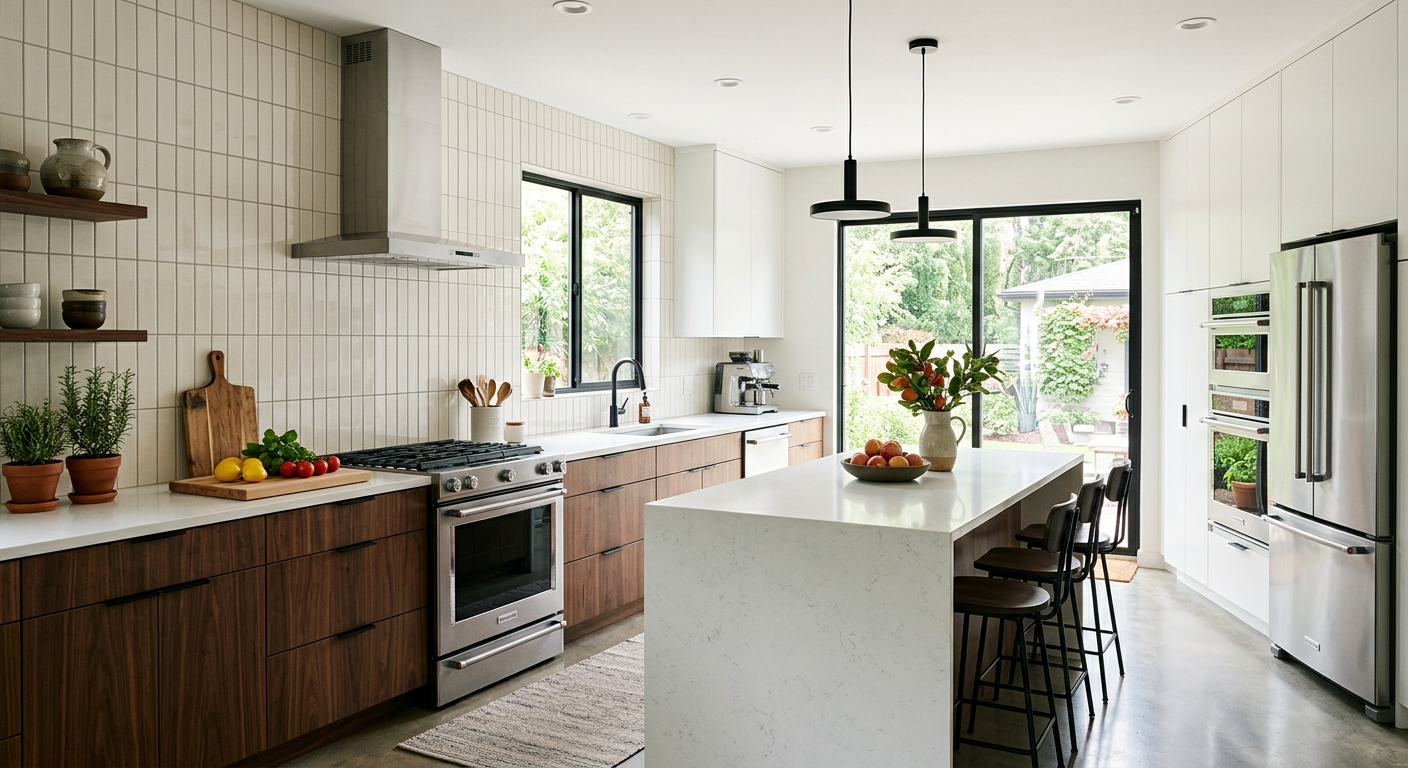
● Vertical Running Bond: This takes the classic subway pattern and rotates it 90 degrees. You get all the historical permanence and safety of a subway tile,
but the vertical orientation introduces an unexpected, contemporary twist. It elongates walls beautifully and is highly recommended for
modern-transitional homes looking for a safe way to stand out.
● The Chevron Pattern: Often confused with herringbone, a chevron layout features tiles that are cut on an angle at the ends. Instead of overlapping at
90 degrees, they meet end-to-end to create a crisp, sharp point. It is incredibly striking and luxurious, but because it requires specialized tile sourcing
and carries extremely high labor costs, it is best reserved for small, high-impact accent areas.
The Under Pressure Verdict: Which Design Wins?
When we sit down with clients to map out their remodeling investments, we always preach a balance of personal enjoyment and financial intelligence.
If your timeline in the home is under 5 years, the winner is clear: Stick to the Horizontal Running Bond (Subway) or a soft, neutral-toned Herringbone. The running bond guarantees safety and broad appeal, ensuring your home sells quickly when hitting the market. Meanwhile, the herringbone pattern functions as the perfect upscale.
compromise—it adds the high-end character that commands premium listing prices while remaining firmly anchored in classic architectural history.
No matter which layout you select, a tile job is only as beautiful as its execution. A stunning pattern can quickly become an eyesore if the cuts are sloppy, the lines are wavy, or the waterproofing beneath the tile is compromised.
At Under Pressure General Contracting, we combine precision engineering behind the walls with flawless craftsmanship on the surface. Whether you want a timeless subway kitchen backsplash or a show-stopping herringbone shower master suite, our team ensures your investment stands the test of time.
The Classic Subway Tile (Running Bond / Half Offset / 50/50 Brickset)
The Herringbone Pattern
The Stacked Bond (Straight Lay / Grid Layout)
Beyond the Basics: Vertical Running Bond and Chevrons